EPISODE 12
Nothing in Bach's Music Should Be a Barrier
with Dr. Reginald Sanders | professor of music, Kenyon University
Dr. Reginald Sanders grew up in Knoxville, Tennessee, hearing his grandmother head off to choir practice to sing Bach cantatas at Shiloh Presbyterian Church — an African American congregation in the 1960s. It was his earliest memory of Bach, and it planted a seed. Years later, working as an engineer at Hewlett-Packard in Silicon Valley, he found himself singing those same cantatas in the chapel choir at Stanford. The music was so consuming that he left his career, sold his car, and started over as a student of voice and musicology. He never looked back.
Now a professor at Kenyon University and co-editor of Compositional Choices and Meaning in the Vocal Works of Johann Sebastian Bach, Dr. Sanders brings both a scholar's precision and a singer's intimacy to the music. In this conversation with host Nick Phan, he traces the journey from Knoxville to Silicon Valley to the academy, and reflects on what it means to devote a life to music this demanding, this beautiful, and this old.
We talk about why Bach's cantatas were never meant for posterity — written for a single Sunday service and handed off to his sons like household furniture after his death. We explore why Bach's own congregation found the music too complex, and why that probably didn't trouble him much. We discuss what it means to read Bach as a craftsman rather than an artiste — someone who brought the same intention to a church cantata as a clockmaker brought to his finest work. And we sit with the question of whether, in a world of instant answers, Bach's demand for slow, deep listening might be exactly what we need.
Dr. Sanders closes by returning to his grandmother's church. Not the language, not the Lutheran theology, not the harmonic complexity — none of it, he says, should be a barrier. The music is there for anyone willing to sit with it.
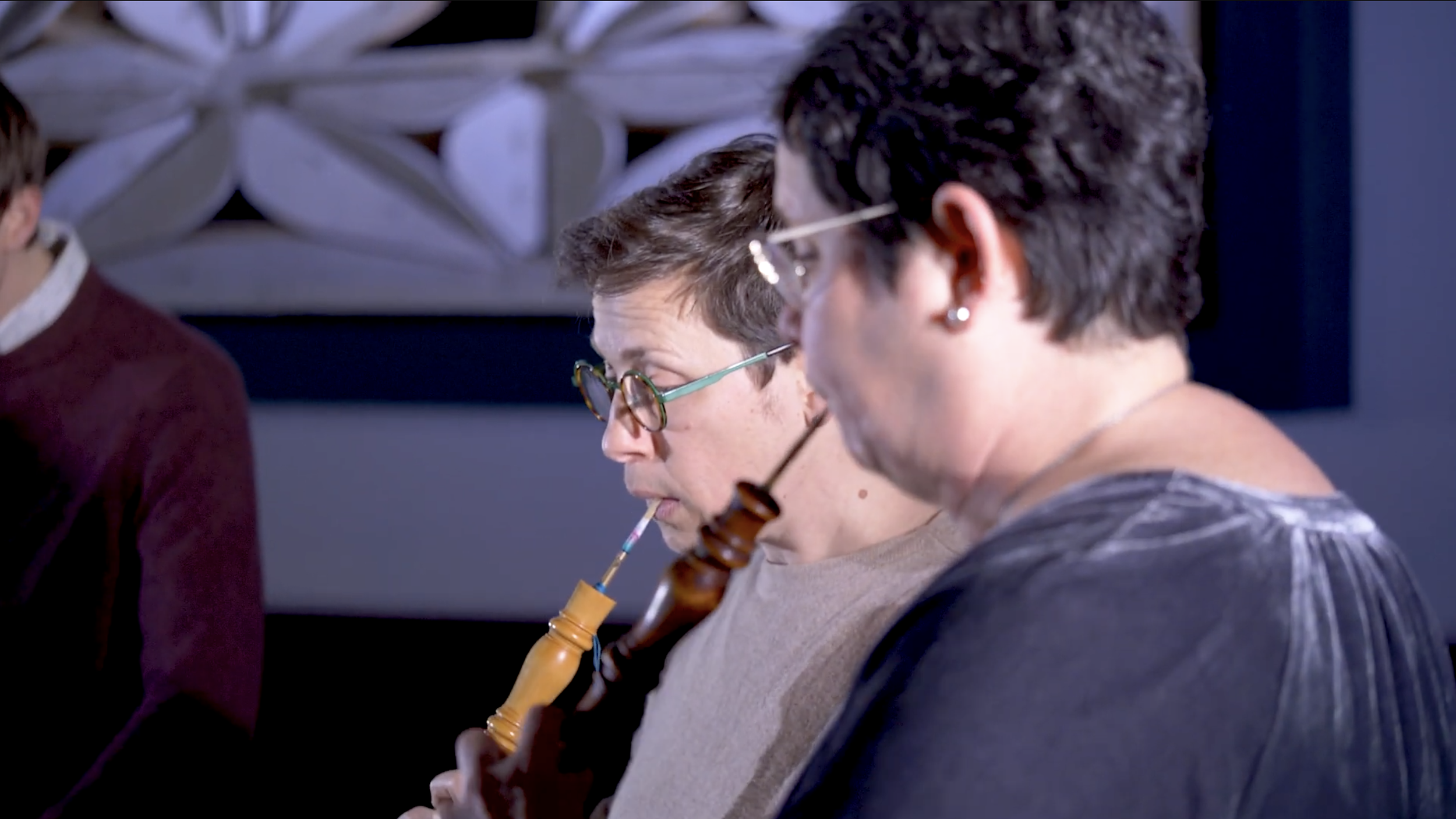
The aria for this episode is taken from Cantata 117, Sei Lob und Ehr dem Höchsten Gut — a general-purpose thanksgiving cantata, unmoored from any particular Sunday, written simply as a song of gratitude. Four contrapuntal lines — tenor, two oboes, and continuo — weave together like a basket, holding everything up.
ARIA
Was unser Gott geschaffen hat from Lob sei und Ehr dem höchsten Gut, BWV 117
PERFORMERS
Nicholas Phan, tenor
with Les Délices
Debra Nagy, oboe I & director
Meg Owens, oboe II
Rebecca Landell, viola da gamba
Mark Edwards, organ
Thanks to Julian Bullitt for his photography of the Emmanuel Music Bach Institute events.
SOUND (BWV 117 only): Joel Negus | VIDEO (BWV 117 only): Clubsoda Productions with Ken Wendt assisting | VIDEO (Interview): Clubsoda Productions
This episode was filmed in partnership with Emmanuel Music and Les Délices.
This project is a fiscally sponsored project of FRACTURED ATLAS.
To find our more information and to make a TAX-DEDUCTIBLE donation to support the continuation of this project please click the button below
TRANSCRIPT
BACH 52 No Barriers
[00:00:00] N PHAN: Do you think the music of Bach is for everyone?
[00:00:04] I
[00:00:04] A TILBROOK: th- no, I don't think so. I mean, I think, I think it should be. I think some people are put off by the religious nature of it.
[00:00:14] K WHATELY: I think for me, the religious element of so much of his output isn't off-putting, despite the fact that I, I'm not at all a religious person.
[00:00:23] J BLUMBERG: I love a coffee cantata as much, as a, a passion, but I think, um, the- I like that it raises questions. I like that it, it, it spurs dialogue.
[00:00:36] S MCGINNIS: When you think about the choral writing, the, and writing for the voice, that if a course is linked to text, that there, there is a desire for a universality in that, which I think is really moving.
[00:00:54] K WHATELY: Yeah, I find it very moving to see what religion has inspired in artists over the centuries, and Bach is a perfect example of that. I
[00:01:05] A TILBROOK: think people kind of see cantatas and masses and passions, and they think that's not for them, without hearing the music, and I think if they heard the music, it- uh, I'd, you know, be surprised if they failed to be affected and moved by it.
[00:01:21] S MCGINNIS: One then has to get beyond the, you know, settings of Luther, and that that wasn't for everyone, and that there's some really complex history, a difficult history there, about how those religious ideas were appropriated and, and not used to, to good gain always.
[00:01:43] J BLUMBERG: I think there's, there's a lot to learn from it.
[00:01:45] I think we put it in its context, and then we also need to scrutinize it as, as modern citizens of the world. I think it's, it's too brilliant to cast aside as music of the past. I think it's, it's, it's ever new, and yeah, the religiosity doesn't, doesn't feel like a barrier to
[00:02:04] the music for me.
[00:02:10] N PHAN: Hi, I'm Nicholas Phan, and this is Bach 52.
[00:02:18] On today's episode, I'm joined by Dr. Reginald Sanders, a Knoxville-born scholar and professor of music at Kenyon University in Ohio, whose path to Bach took him through Silicon Valley of all places. As a boy, he first encountered Bach's music hearing his grandmother sing Bach's cantatas in her Presbyterian church choir in Knoxville.
[00:02:43] Later, working as an adult in the tech industry in California, he encountered those same cantatas again, singing in the chapel choir at Stanford. That life-changing experience with Bach's music set him on a path, a path that convinced him to leave tech- And to pursue the study of singing and get a PhD in musicology.
[00:03:03] Dr. Sanders's work focuses in on the music of Bach's son, CPE Bach, as well as the vocal music of Johann Sebastian Bach. He co-edited a volume entitled Compositional Choices and Meaning in the Vocal Works of Johann Sebastian Bach, and that's why I wanted to speak to him today. In the book, he talks about how Bach's musical settings always seem sort of inevitably wedded to the text.
[00:03:30] In our conversation, we talked about how Bach's weekly church cantatas had a utilitarian purpose, of course, as part of the service, but also how they functioned as daring artistic experiments. Dr. Sanders describes them as a different masterpiece every Sunday. We also talk about how Bach's marriage of text painting and counterpoint can draw listeners in even when one doesn't speak German or one isn't Lutheran.
[00:03:56] We also chat about why Bach's own parishioners in his own time thought that the music was too complicated, and we talk about how Romantic era audiences rediscovered the beauty of his music. We also chat about what the slow, deep listening of Bach requires of us, and also what it can teach us in an age of instant answers.
[00:04:17] And we chat about, of course, Dr. Sanders's mission as a teacher to help students discover the beauty beneath the notes. At the end, of course, we ask him our central question, is the music of Bach for everyone? And he answers by saying that he doesn't believe that there's anything in Bach's music that should serve as a barrier.
[00:04:36] Not the German, not the sacred context, not its complexity. He says it's available for anyone who wants to sit with it, and he invites us all to do that.
[00:04:46] Enjoy this conversation, and please stick around for the aria taken from 117.
[00:04:53] So we're ask- obvi- the question the series is centered around is this sort of generic question of, do you think the music of Bach is for everyone?
[00:05:00] But before we kind of dig into the meat of that, I'm always really curious to know what people's journey with the music of Bach is, how he entered your life, and how that journey has brought you to the current place where you are now.
[00:05:13] R SANDERS: Right. Right. Well, I'm, I'm from Knoxville, Tennessee.
[00:05:16] N PHAN: Okay.
[00:05:16] R SANDERS: And I think my earliest memory of Bach was, I was at my grandmother's house one evening, and she was going out, and we said, "Where are you going?"
[00:05:23] She said, "I'm going to choir practice. We have to learn our Bach cantata." Oh, wow. I know, right? In Knoxville, Tennessee, Shiloh Presbyterian Church, right, an African American church. And, and I remember thinking, I was prob- I was under 10 years old. I don't remember exactly how old, how old I was. But I remember thinking, I knew who Bach was even then, and I, I- Either knew what a cantata was or, and realized that's what we heard every Sunday, right?
[00:05:48] So that was kind of my first introduction, uh, to Bach way back then in the 1960s, right? Wow. This is happening in Knoxville, right? Isn't that crazy? I'm pretty sure they sang them in English, though. Um- Okay ... but, but people really enjoyed them. Then w- we moved from Atlanta, from Knoxville to Atlanta, Georgia, and there I sang in the Atlanta Boy Choir.
[00:06:06] We didn't sing any Bach, though, because he needed... It was a treble choir, right? And usually unaccompanied music. And then, uh, when my voice changed, I sort of didn't sing so much, right? I did, I did musical theater and stuff in, in high school. And then when I went to college, though, I was actually an engineering major 'cause I'd, I'd done well in science and math and all that.
[00:06:26] And then after college, I got a job in Silicon Valley, so that's how I ended up in, uh, in, in, uh- San Francisco ... San Francisco. And so I'm working this job, and I... It was, it was a great company and all that. Many great companies out there. Nothing to do with them, but, um, I also started singing in the chapel choir at Stanford.
[00:06:43] N PHAN: Oh.
[00:06:43] R SANDERS: And so every Sunday we would do a Bach cantata appropriate for that Sunday. And I thought, "Oh, this is just this is it," right? And then, uh, we did, uh, the St. Matthew Passion, and I was just hooked. And then I, I thought, "Well, my, my t- best hours of the week are choir rehearsal and Sunday morning and, and I'm spending 60 hours doing something that I'm less interested in."
[00:07:08] And so that's when I, I, um, I, I left Silicon Valley, started studying voice, and then got a degree in musicology at San Francisco State, and then later got a PhD. So that was... But, but I was hooked on Bach from those cantatas from...
[00:07:21] N PHAN: Wow. From be- just, you know, being a 10-year-old in Knoxville.
[00:07:24] R SANDERS: Right. Right.
[00:07:24] N PHAN: That's incredible. Did they do them every week?
[00:07:27] R SANDERS: I think they did.
[00:07:28] N PHAN: Wow.
[00:07:28] R SANDERS: Yeah. Well, now I don't know if they did a whole cantata or just maybe some excerpts, but, um-
[00:07:33] N PHAN: Even an excerpt, though, that's enough. I mean- Yeah ... those are complicated, really difficult- Yes ... intricate pieces of music. Isn't, isn't
[00:07:39] R SANDERS: that great, though, that they were doing
[00:07:40] N PHAN: it?
[00:07:40] That's incredible.
[00:07:41] R SANDERS: Yeah.
[00:07:42] N PHAN: I mean, you make this giant leap from engineer- Yeah ... Silicon Valley to musicology and the music... I mean, how did your family react?
[00:07:50] R SANDERS: Well, 'cause so I, so I had this, I worked for Hewlett-Packard. I had a, a great job. Looked like I had a great career. And so I think people didn't quite understand it, you know what I mean?
[00:07:58] But, so I'll go back to my grandmother again, though, the same one, right? I, I told her that I wasn't, I just wasn't so happy with all this. And I said, "But I feel like I'm gonna let people down if I don't go through with this." And she said to me, she said, because I didn't have a family or anything, she said, "Your only obligation to anybody in this lifetime is to yourself."
[00:08:17] And I was like, "Okay." I mean, so that helped me a lot, right? And so, so I was about 25 years old when I did that, right? And I thought, "If it doesn't work out, I'll do something else, but, but I've gotta try it." And it, and it felt so good, right? So either rehearsing with the chapel choir, performing with the chapel choir, then I started taking voice lessons and just wonderful, right?
[00:08:37] Mm. And I thought, "Even if it doesn't work out, I've given myself this experience-" And so no matter what, it, it's worth it. And then if I have to, I'll go do something else, but it's worked out.
[00:08:46] N PHAN: I mean, it speaks a lot though to the power of Bach's music, at least in your life because it, you know, this... It totally...
[00:08:52] His music inspired you to completely take a complete like left turn in terms of the course of your life.
[00:08:58] R SANDERS: Yes. You know what? It's true. It really is true. And, and maybe due in part because I was still s- maybe young and foolish or whatever and not afraid. But my f- my passion for it was so strong that I wanted to try it be- because, because it felt so good, right?
[00:09:14] And so, so when I left Hewlett Packard, everybody was saying, "Oh, you're so brave to leave this." And I said, "I feel like I'm going out to play,"
[00:09:21] N PHAN: you know?
[00:09:21] R SANDERS: And, uh, and that's really how it felt. I mean, it felt like the, the right thing to do, like the... You know, I was, I was doing what was more authentic and more genuine for me.
[00:09:29] N PHAN: Right.
[00:09:31] R SANDERS: So and it's worked out. I mean, it could've...
[00:09:33] N PHAN: Yeah, obviously it's worked out beautifully. Yeah. I mean,
[00:09:35] R SANDERS: it could've, uh... But, but it would've been okay because, as I say, I, I... If I had to go do something else, I would do it. And I would've tried this, and I wouldn't have to have any regrets about it, right?
[00:09:44] N PHAN: It's amazing that you just followed your heart like that but also kind of let Bach lead you. That's-
[00:09:50] R SANDERS: Yes. Yeah. I, you know what? I, I, I guess at the time... Uh, but I'll tell you another thing though. San Francisco was much less expensive then than it is now. I mean, I had- What are you
[00:10:01] N PHAN: talking about?
[00:10:01] R SANDERS: I had a beautiful like big studio apartment for like $350.
[00:10:06] I'm sure if... I think it may have turned into a condo, but it would be 3,000 probably today- Oh, yes ...
[00:10:11] N PHAN: or something. At least.
[00:10:11] R SANDERS: You know? So you could... You know, like I... And I went to San Francisco State, and the tuition was $200 a semester maybe- Oh, wow ... or something like that. And so it was, it was really... It was ma- So I knew that I...
[00:10:21] And I sold my car. And so my dad said, he said, "I knew he was serious when he sold the car," like if he was, you know? And so yeah, but as I say, it's turned out. But even if it hadn't turned out quite this well, it, it would've been a journey that I'd wanna take, right?
[00:10:35] N PHAN: Yeah, of course. You would, you would know.
[00:10:36] You wouldn't have regrets either way.
[00:10:37] R SANDERS: Right. Right.
[00:10:38] N PHAN: So San Francisco State and you, musicology, and did you immediately know that you wanted to focus your research on the music of Bach?
[00:10:45] R SANDERS: I did. Well, after, after those cantatas at Stanford, right? Right. And I mean, that music is just so gorgeous. Well, really the St.
[00:10:50] Matthew Passion too, right? I mean-
[00:10:52] N PHAN: Right ...
[00:10:52] R SANDERS: I mean, that is, it's probably my favorite Bach piece. And-
[00:10:56] N PHAN: I kinda feel like it's the Hamlet of cla- Western classical music, you know? Yeah. It's like this sort of definitive work that kinda changes everything.
[00:11:04] R SANDERS: So then I went and, and got a PhD. And, and when I was thinking about what I should do my dissertation on, I thought about some other things just because, you know, there are many interesting fields, right, in musicology.
[00:11:13] And, and a professor reminded me. She said, "You know, you've always loved Bach. I think you should be sure that you stick with Bach." And, and she was right. And so I was talking with my advisors, Dan Melamed, about- dissertation topics. And, and we were talking and I, and I knew that C.P.E. Bach had gone to Hamburg, and he was a cantor in Hamburg, and I knew that he had some of his father's music.
[00:11:34] N PHAN: Mm.
[00:11:34] R SANDERS: And so I said to dad, I said, "Oh, those wonderful people in Hamburg that got to hear Bach's music after his death, right?" And he said, "Well, to be honest, we don't know if C.P.E. Bach was really performing that music, right?"
[00:11:45] N PHAN: Wow.
[00:11:45] R SANDERS: And so then I went on and did a dissertation on C.P.E. Bach and church music in Hamburg, and he actually didn't do a lot of his father's music, um, because by then it was old-fashioned, right?
[00:11:54] Right. And, uh, he... and he... but he performed a lot of other people's, uh, music. He didn't, he didn't really compose a lot of his own music, uh, for, for the church services. To make a long story short, I think because he realized that churches... So in the 17th century, for example, the church was one of the best places to hear public music, right?
[00:12:12] But as we get into the 18th century and we have concerts, people can hear music outside of the church, and I think he was more interested in writing music that was gonna be commercially viable, right? Mm-hmm. So he wrote lots of keyboard music that he could sell, and, and wrote oratorios that weren't necessarily confined to a particular church service, right?
[00:12:29] N PHAN: Right.
[00:12:29] R SANDERS: Because pe- that wasn't the only way people could hear music now. They could go to a concert, they could do it at home. And
[00:12:35] N PHAN: so- Right, and it's kind of in with this enlightenment thinking, right? Sort of like- Exactly ... thinking- Yes ... a little bit more secularly, thinking a little bit more in the public sphere in a different way.
[00:12:43] R SANDERS: Exactly.
[00:12:44] N PHAN: I'm gonna come back to some of that actually because I'm... uh, one of the reasons I've... One of the reasons I've embarked on this whole journey with this is, you know, I kind of entered Bach's music personally with- in the instrumental realm 'cause I started out as a violinist. Oh, I see. And then when I started singing, you know, I took that obsession with me obviously, and I've been very fortunate that it's remained a part of my professional life as a singer, partly intentionally but also partly just, you know, luck of the draw that it works in my voice.
[00:13:08] But, you know, when I think about this question, is this music for everyone, I mean, as a singer you're suddenly very much confronted with this extremely specific religious dogma. And so it's one of these things where, you know, as a performer I'm constantly grappling with, you know, issues of faith and, you know, the theology and, you know, these sort of, I don't know, modes of thinking that are so tied to this text.
[00:13:34] Mm-hmm. And you've edited this wonderful book, The- Oh,
[00:13:38] R SANDERS: right. Right ...
[00:13:39] N PHAN: about the vocal music of Bach and, and the texts. And- Right. Right ... yeah, so I'm really... Sorry, I have to now have to remind myself what the title of the book is.
[00:13:47] R SANDERS: Compositional Choices-
[00:13:48] N PHAN: Compositional Choices and Meaning in the Vocal Works- Yeah
[00:13:50] of Johann Sebastian Bach.
[00:13:52] R SANDERS: Yeah.
[00:13:52] N PHAN: So, you know, I'm, I'm really curious to hear, you know, the process of editing that and, you know, on your research as well, some of your perspectives on this.
[00:14:00] R SANDERS: I co-edited that with Mark Peters, and we dedicated it to Don Franklin who is passed away now, but he was a very important Bach scholar and a, and a great friend to us.
[00:14:10] We arrived at that concept because- Especially in the vocal music, right? Uh, for me, the mo- the music is just beautiful,
[00:14:17] N PHAN: right? Right. I mean,
[00:14:17] R SANDERS: just I'd just like to start there, right? It's just beautiful. Uh, but then your curiosity gets the better of you and you go, "Well, why is it beautiful," right? Mm-hmm. And so that's what we were after in that book, in the various essays, was to look at the pieces and maybe try to get a handle on what things Bach did to convey e- the meaning of the text or the meaning of the occasion, right, through the mus- through, through the compositional choices that he made.
[00:14:43] I, I mean, the music, it reveals itself to you if you, if you look, you know, uh, long enough and, and you... And his genius then. It, right? You think- Right ... you know, so.
[00:14:53] N PHAN: I mean, in a way I always think, you know, my first reaction to it is I think, "Oh, this text makes this impenetrable." But actually somehow the music invites me to kind of meditate more on the text.
[00:15:06] Which so it's interesting that you say the music reveals itself and the music is beautiful, but I mean, there's something about-
[00:15:11] R SANDERS: How they work together.
[00:15:12] N PHAN: Yeah. Yeah. There's something about the way they work together that I find really fascinating. Yeah. And you know, I'm, it... I think the thing that always fascinates me is at the end of the day, it becomes l- it, it brings down the barrier of the text as it were.
[00:15:24] And I wonder if that was some of his intention or, I mean-
[00:15:27] R SANDERS: Well, you know, I wonder about that, the barrier of the text. Like my grandmother, th- th- again, they were singing these in English, but I, I think I, I, I'm not sure that even if you don't know German, I don't know that the language is a barrier because the music speaks.
[00:15:39] N PHAN: Mm.
[00:15:40] R SANDERS: Right? And, and you may wonder what is... He's saying something. I'm not entirely sure what it is. And, and you may have to go to the translation in a way, right? But I, but I think it first speaks to you without your even understanding the text and then you, you know, you might go and, and delve a bit farther.
[00:15:57] N PHAN: Right. Well- If that makes sense ... and yes, it does make sense. And I mean personally as a performer I'm like required to, so I think this is why this is in my- ... my mind. And, and it's-
[00:16:06] R SANDERS: Well, for us though, the words are important. But you know what I mean? I, I also grew to really lear- love the language German.
[00:16:12] N PHAN: Mm-hmm.
[00:16:12] R SANDERS: A- and so I, I love, I love going there and being there and trying to sort of... I mean, it's, it's many years after Bach's death now, but, but the culture in some ways, you know, there's some elements, right, that, that remain. And you can imagine what life was like for Bach, you know, there in Germany and, and put yourself back there, right?
[00:16:29] And then if you, if you can gain a kind of intimacy with the text, then, then I think the music speaks to you even more. And you're just... Then you're really overwhelmed I think because the, the, the true impact of what he was, uh, trying to do, uh, you can fully recognize and fully appreciate.
[00:16:44] N PHAN: Yeah. He's... I mean, his creative ways of going about all of these texts.
[00:16:50] I mean, some of the texts get to be really... I don't, I mean, I think about the Erwäge. I keep coming back to this aria in the St. John Passion where like you look at that text and you think, "What are they talking about?" You know, we're talking about like the gashes on a person's back that's, you know, about to be crucified and how that's such a beautiful thing and how this, it, it- paint such a beautiful rainbow, and you're sort of like, you know, this is it's, it's really sort of sadomasochistic in a way.
[00:17:18] It's very strange. But something about the music sort of helps you unlock- Okay.
[00:17:22] R SANDERS: What he was really getting
[00:17:23] N PHAN: at. Yeah. Yeah. And I mean, in a way, like for me at least, it's the music that allows me to kind of enter that space and think about what those things could mean. But I mean, especially in, you know, sort of our contemporary world- Mm
[00:17:38] you know, we're so quick with things, and so like looking at that- Mm ... these words and the meanings of the words sometimes I think I wonder if it's a barrier for people, and I wonder, you know... There are also these questions of, you know, was he really composing for everyone, or was he just composing for a very specific sort of group of people?
[00:17:59] Is there an evangelical-
[00:18:00] R SANDERS: Mm ...
[00:18:01] N PHAN: intention behind his cho- his compositional choices- Mm-hmm ... or was it just meant for the people who he knew were gonna be in the room?
[00:18:08] R SANDERS: You make me think of a couple things. I, I think he was focused probably on, on his world, on his congregation, right? And communicating the musical message consistent with the gospel and all to those people, right?
[00:18:22] And I don't know that he re- really knew his music would live on after him. I don't know that he was, you know, thinking about it in those terms. The other impression I have is that he was such a serious artist that he may have just been trying to do, maybe even separate from the people that would hear it, give his best rendition of that text, of that message, right, as an artist-
[00:18:45] N PHAN: Mm-hmm
[00:18:45] R SANDERS: you know, without regard to who might, uh, who might hear it. Does that, does that make sense?
[00:18:50] N PHAN: Yeah, that does make sense. Yeah. What do you think motivated Bach?
[00:18:52] R SANDERS: Oh, that is a great question. Now I think, hmm. I think he may have been motivated by different things in the instrumental music and the vocal music.
[00:19:02] So let's take the sacred vocal music. He was really trying to maybe enhance the gospel for that Sunday, right, for the, the message for that Sunday, you know, and, and, and getting, having an appropriate text and giving us the best musical reading of that text to edify the congregation, right? In addition to the sermon and the gospel reading and the epistle reading, this cantata's also gonna contribute to their understanding of, of what that Sunday's about and what...
[00:19:27] Right?
[00:19:28] N PHAN: The lesson we're supposed to take away from it.
[00:19:29] R SANDERS: Right. Right. And, and, and, and, and larger theological, you know, issues too. Now I haven't done as much work with the, with the instrumental music. In some pieces, he was clearly trying to explore all the possibilities, so like Art of Fugue, right? Right. And, uh, Well-Tempered Clavier, right?
[00:19:44] He's doing all sorts of things like that. I think in, in those instrumental pieces he was going for beauty, both a kind of aesthetic beauty and a kind of compositional mastery. Although he may not have thought of it exactly that way, but he was challenging himself-
[00:20:00] N PHAN: Mm-hmm ...
[00:20:01] R SANDERS: you know, to see what he could do.
[00:20:02] So I think it was, it was kind of an artistic achievement, like what, what can I do and-
[00:20:07] N PHAN: You talk a lot about him as an artist and his artistic intentions. And, you know, in this way, I mean, you know, there's this debate about is he forward-looking, backward-looking, et cetera. And in that way, he seems very forward-thinking in that sense because, I mean, at the time, he's really a tradesman.
[00:20:26] E-
[00:20:26] R SANDERS: exactly. I actually, I wanted to say that, right? Even though I keep saying artist.
[00:20:30] N PHAN: Yeah, yeah.
[00:20:30] R SANDERS: He, he really was a, a craftsman.
[00:20:32] N PHAN: Yeah.
[00:20:32] R SANDERS: Right? But, but I think he brought art to his craft just the way I think in his time a clockmaker brought art- Right ... to his, his craft. You see what I mean? They all hopefully did that, right?
[00:20:42] And- Which
[00:20:42] N PHAN: is why we have all these extraordinarily beautiful things from that time period. From
[00:20:45] R SANDERS: that period, right? Yeah. And so, yes, I'm really glad you said that 'cause I don't want people to think he an artiste kind of thing, right? But, but in his own mind, I think he wanted to be superlative at, at what he was doing, right?
[00:20:56] If I'm gonna do it-
[00:20:57] N PHAN: Mm-hmm ...
[00:20:58] R SANDERS: I'm gonna do it, you know, with sort of supreme artistry, right? But, but you're right, he was, he was fulfilling an obligation, both professional and I think within personal.
[00:21:08] N PHAN: Can you speak more to, like, what might be personal, like, personal-
[00:21:12] MUSIC: Yeah. Well,
[00:21:12] N PHAN: I
[00:21:12] MUSIC: think- ...
[00:21:13] R SANDERS: for him? I, I think his faith was important to him, so I think he took it seriously, w- writing those cantatas, right?
[00:21:18] I mean, this is a message, these are messages I believe in. Mm-hmm. And I'll do it as best I can. For, for that reason, plus artistic reasons, right?
[00:21:27] N PHAN: I mean, it explains why he was so, I don't know, detail-oriented with even something like a cantata, which he could've, he could've phoned those in. I mean, every week?
[00:21:38] Come on. But the thing that, I mean, like you were saying about what the magic of them that kind of drew you in, it's like you really do get a sense of this genius 'cause he never phones it in. I mean, you... People may like one or the other- Better, yeah ... better, but there's not a dud. And some
[00:21:55] R SANDERS: are more inspired than others, right?
[00:21:56] N PHAN: Yeah. But- But there's not really a dud in- Yeah ... like three years, three whole cycles that we have survive.
[00:22:01] R SANDERS: Right.
[00:22:01] N PHAN: I mean, maybe the duds are all in the two years that-
[00:22:03] R SANDERS: Well, probably not,
[00:22:05] N PHAN: but right. I know.
[00:22:06] R SANDERS: Yeah, yeah. No, he, he was, he was amazing.
[00:22:09] N PHAN: Yeah.
[00:22:09] R SANDERS: And he brings us such joy to this day, right? I mean, you can't...
[00:22:13] N PHAN: Well, one hopes. I mean, we're about to do a concert tonight of his music, so hopefully people will feel joy. Oh,
[00:22:18] R SANDERS: I'm sure they will. Of course.
[00:22:21] N PHAN: The final part of your book talks about just sort of reception of his own music at the time, and I'm curious to hear more about that. I mean, what was the public thinking at the time?
[00:22:28] And also I'm curious to also hear more about right after his life. I mean, I know that he became immediately unpopular, and I imagine that part of that is because he was clinging to these sort of what were quickly to become very antiquated forms of music.
[00:22:43] R SANDERS: Yeah. So even as early as when he was in Arnstadt, right, in one of his early jobs as organist, they complained about how complicated the music was.
[00:22:49] And, and so already then, so maybe by the 1720s or so, people are already thinking of- What we think of as classical music, right? A more homophonic texture, clarity- Right ... balance, the enlightenment. So that's the reason I think C.P.E. Bach, he had that beautiful music but he knew that he couldn't really perform that in Hamburg.
[00:23:04] So it did sort of lose favor until we get into the 19th century, right? When, when there's an aesthetic match again. The style of the music is quite different, right? But whereas the, where the Baroque was also very expressive, the Romantic period was also expressive so now those things meet again and the complexity of Bach's, Bach's music is not gonna be a hindrance anymore because w- soon enough in the 19th century, right, we're gonna have very complex music.
[00:23:28] I think the musicians always knew how good the keyboard music was even if it maybe wasn't getting played. If people saw it
[00:23:36] N PHAN: Right.
[00:23:36] R SANDERS: Right ... they just thought, "Oh, my goodness. This is amazing," right? Right. So, so in a way he kinda lost favor but I, I, I sort of feel like the, the people in the know knew how good that music was and-
[00:23:46] N PHAN: Sure, and I mean, the things like the keyboard works, those sort of stay in the sort of like educational canon, right?
[00:23:51] The, yeah. You know, you know, whether his music is trendy or not
[00:23:54] R SANDERS: commercially
[00:23:54] N PHAN: speaking. You, you still use
[00:23:55] R SANDERS: The Well-Tempered Clavier and
[00:23:56] N PHAN: all that. Yeah, in order to like learn how to play this instrument, for instance.
[00:23:59] R SANDERS: Yeah.
[00:24:00] N PHAN: So I'd love for you to speak more about how people felt his music was too complex, I mean, in, in his own lifetime.
[00:24:06] I mean, he d- Well, oh, I know ... how did he react to that?
[00:24:08] R SANDERS: I wondered the same thing you said before, too, about- Yeah ... how in this age that we want, want things fast.
[00:24:13] N PHAN: Yes.
[00:24:13] R SANDERS: And that might be a hindrance. When I first started with this though, it was before that time. Like we didn't have cell phones, we didn't have- Right
[00:24:19] and then it was, it wasn't unusual to take your time with the music. It was what you always did, right?
[00:24:24] MUSIC: Right.
[00:24:25] R SANDERS: And so when you said that I had to think, "Oh, that's true. This is a different time," right? But I wonder if we shouldn't get back to that a little bit. Like you, you, you kinda wanna live, you know, in those words a little and let, you know, and take your time with it.
[00:24:39] So I'm teaching a Bach seminar again next spring. Mm-hmm. And I'm gonna have some great students and, and I hope I can encourage them to take the time to get inside the music and appreciate, you know, what's going on. So anyway, I didn't want... I wanted to go back to that but you were asking about the reception.
[00:24:54] N PHAN: Oh no, I'm glad, I'm glad 'cause that's all, I'm, there's this conversation is gonna hop around. That's great. Yeah, no, I'm curious about like, you know, I would also like to hear more about the reception during the time it was, you know, was he resistant to that? Did he care? I mean, people thinking it was too complex.
[00:25:07] I mean, obviously he didn't care too much 'cause he continued for many decades after that. Yeah. You know,
[00:25:11] R SANDERS: I, I don't, I, I haven't like really looked into that but I don't think he cared really. Mm. But we know that he could have composed differently if he wanted to, right? Because some of his pieces, you know, have a bit more of like the, the classical sort of galant style to them.
[00:25:24] And so it wasn't that he like, "I can't do this," right? I think he was still making m- making the artistic choices that he wanted to make, right, at a given time.
[00:25:32] N PHAN: It's interesting too, I mean, when you talk about him not necessarily, not necessarily being concerned about whether he was going to be enjoyed po- you know, post living in, you know, in his afterlife, uh, that it, that maybe freed him up to feel like he was able to do what- to whatever the text demanded and whatever the situation demanded to really kind of dig in to deep into his own integrity and-
[00:25:55] R SANDERS: I think so.
[00:25:56] I think so. Again, it, it, it's conjecture, right?
[00:26:00] N PHAN: Right.
[00:26:00] R SANDERS: But, but if, if I try to put myself in his situation, you know, 'cause so few pieces were published in his lifetime, so few vocal pieces, right? So- Right ... so he wouldn't have had the notion that people are gonna, you know, sort of ever see these again.
[00:26:13] N PHAN: So the...
[00:26:14] I mean, he wasn't, like, publishing editions of these cantatas. Like, these were things that he was just quite literally writing to be used for the service and then onwards.
[00:26:22] R SANDERS: You know, there's a statement, I think it was when he left Mühlhausen, I wanna say.
[00:26:27] N PHAN: Mm-hmm.
[00:26:27] R SANDERS: He said that, "I- my goal is to have re- well-regulated church music."
[00:26:32] And we think in some ways that maybe means having, you know, cantatas every Sunday and, and... A- but again, they were not a, not a commercial approach, but just that's what-
[00:26:43] N PHAN: It's well-regulated for the system that's there. Like, it's like saying, "I want better, you know, file organization."
[00:26:48] R SANDERS: Right, right. And I, so I wanna, I wanna be able...
[00:26:51] I wanna have a cantata every Sunday. Right. And maybe more than one. But, but that was his goal. It was his artistic goal and his maybe just a personal goal too, right, for achievement and accomplishment, um, without any particular concern maybe for posterity or-
[00:27:06] N PHAN: Right ...
[00:27:07] R SANDERS: or money. Yeah.
[00:27:08] N PHAN: It's a fascinating combination to me because you have this, I mean, in the cantatas, and this is part of the reason why I'm focusing on the cantata arias for the aria portions of these interviews, is that you have this mix of high art, high, you know, extraordinarily high level of artistic ex- experimentation.
[00:27:26] He's clearly trying to play with different ideas and sort of form ideas. But at the same time, there's, like, a really utilitarian purpose- Mm-hmm ... to these-
[00:27:38] Mm-hmm ...
[00:27:38] cantatas and these pieces, and so in a way you're sort of getting a daily or weekly sense of what it was his work life was and where his mind was on a sort of daily sort of quotidian basis.
[00:27:49] And it's... I don't know. I'm, I'm just fascinated to hear that. You know, of course, I never thought about that. I keep thinking of, like, just having the Neue Ausgabe, like, at our- Oh ... on IMSLP at our disposal. And, you know, here he is, like, writing these things and, you know- Yeah ... he wants it for just the church, and it's, you know- Right, right
[00:28:04] he's just thinking about, like...
[00:28:06] R SANDERS: Yeah. The, the, the one cantata that was published during his lifetime was Gottes Mancherne- Okay ... 'cause it was a, it was the, um, cantata for the, the changing of the town council in, in Mühlhausen. I should know this exa- but there may be another one or two, but, but that one for sure.
[00:28:20] But, but most of them weren't. And, and in some ways though for us, it, it's great because the manuscripts that survived, they are, they were utilitarian. And so we can, we can look at them and learn a lot about what the performance was like, right? Right. And, and that's wonderful. You know? We can look at the markings and, and r- and have some idea of how many singers he had.
[00:28:43] Mm-hmm. And again, 'cause he's just getting it ready for that Sunday. Right. And then, and then of course after he died, you know, he gave it to his sons and divided up the parts and the score so that- They would sort of go twice as far, so to speak, right?
[00:28:54] N PHAN: Like a backup system.
[00:28:55] R SANDERS: Yeah. So, so if he gave the parts to one son, he'd give the score to another.
[00:28:58] Mm-hmm. And then you've, you've gotten sort of double mileage out of that. So but yeah, it was very u- very utilitarian, I think. And at the same time, I think he was aware of the high level of the art.
[00:29:08] N PHAN: If only we all approached our daily jobs- I know ... with that kind of thought and intention. Coming back to this question about our time, I mean, I, you know, obviously this question of do you think his music is for everyone is very much related to, you know, a reaction to the times in which we live.
[00:29:22] And on the one hand, you know, I do think is it because we are looking for quick answers? And like you say, I mean, this is ob- I obviously feel that maybe we should be spending more time with it 'cause we all need to take a breath and slow down- Yeah ... and not have everything at our fingertips quite so easily.
[00:29:38] But also, you know, it's I feel like we're entering a pl- you know, as the world gets more and more increasingly chaotic and fraught, you know, we're entering a, a time in which these sort of enlightenment ideals of reason and easy answers are not necessarily ... They don't make sense anymore. Mm. You know? Like, it's so increasingly clear to all of us that our lives are not some sort of formulaic thing, that there's, things fall on a binary and, like, there's easy answers that are yes/no questions to these, the questions that are being asked of us.
[00:30:11] And so I wonder in that sense if his time, I mean, if his music is more appropriate for our times because of that- Yes ... 'cause he's asking us to sort of sit in the mess of it all.
[00:30:21] R SANDERS: Yeah, I hadn't thought of it, but I think, I think you might be right. In, in the world we live in today, it's just things are not sort of black and white anymore.
[00:30:27] There are, there are not simple answers, and the world is very complex. And, you know, if we're gonna work out some of the problems that we have, we've gotta look at the intricacies of what's going on, right? And so I think, I think looking at, at, at Bach's music or i- in a more with close readings and taking the time, it, it does fit into what we need to do in other aspects of our, of our lives.
[00:30:48] N PHAN: You know, so you're ... You teach. You've got students coming through. You're about to teach a seminar. You know, what is your hope for this for people's relationship with this music going forward and, you know- Oh ... how do you see your responsibility as a teacher playing into that?
[00:31:01] R SANDERS: Always for me, I'm always amazed at just how beautiful the music is.
[00:31:06] You know what I mean? Like, no matter what kind of a day I'm having, I go teach my class at 2:40, and we're gonna play beautiful music. And so whatever else is going on, right? And so, so first, I think I, I just wanna be able to bring that kind of beauty into their lives, you know?
[00:31:19] N PHAN: Yeah.
[00:31:20] R SANDERS: And, and I, I, I try not to teach pieces I'm not excited about because the students pick up on that, right?
[00:31:25] I feel like the guy who wants to show you his vacation pictures. But usually in class, they all wanna see them, so it's okay, right?
[00:31:34] N PHAN: Right.
[00:31:34] R SANDERS: So, so that's how I feel about it is I'm sharing with people something that I'm really excited about. And, uh, and, and I'll show you what I've learned about it, right, uh, what, what's been revealed to me and maybe encourage you to Uh, to do the same.
[00:31:48] You know, I, I, I pick pieces that I'm excited about and I want, I want to show them why I'm excited about the piece and, and at the same time give them the tools so that, you know, they may find another piece exciting and they'll know how to approach sort of understanding it better. So I, I want to... A- and in a way it relates to the book a little bit too, right?
[00:32:08] Why is it beautiful, right? You know? A- a- and how did he construct it to be so beautiful and then what's the meaning? That's what I try to do with the students. A- and I want them, even the sort of the music history students, to know enough theory to understand, you know, uh, what Bach's doing because it's, it- it- it's pretty extraordinary.
[00:32:26] I mean, with many composers it's extraordinary, right? Right. You, you want to get in there and look at what they, they do and... But, but it's worth it when the music is this beautiful, right? It'll, it'll pay dividends because, um, you're, you're just understanding on a, on a deeper level why it is that we like the music.
[00:32:43] N PHAN: Yeah. It's interesting, this question of analysis and its value with this mu- you know. It- I think that's something that in some ways I, I wonder if some people who are not as familiar with his music find it off-putting, like you have to know. But I, it's the genius of it to me is that, like you say, the beauty is always self-evident.
[00:32:59] I mean, do you feel... And you obviously feel that analysis, though, does add value. I,
[00:33:02] R SANDERS: I do. All right, it doesn't, it's not necessary, right? Right. I mean, you can enjoy it. You just hear it and it, if it moves you, that's great. But if you're also curious as to see how did he do that? Like, why, why did I like that phrase so much, right?
[00:33:14] Right. Why did he do that? And, and sometimes you can't really, there's not a clear answer though, right?
[00:33:19] N PHAN: Right. No, of
[00:33:20] R SANDERS: course. You know? You, you can't really look at the melody and say, well, the shape of the melody, it works with the text but I, I... You know what I mean? I'm not... And, and it moves me, but I'm not, you know.
[00:33:32] N PHAN: Then you get into the sort of like indescribable why. Right,
[00:33:34] R SANDERS: right, right. I, actually I thought about you. One of my favorite cantatas is Number 23.
[00:33:39] N PHAN: Mm-hmm.
[00:33:40] R SANDERS: Du wahrer Gott, and it has that beautiful tenor recit.
[00:33:42] N PHAN: Right.
[00:33:43] R SANDERS: And, and it's so simple, but it's so beautiful. I don't... It's so... So sometimes you, you, there's not like, oh, it's this chord going to this chord or this voice leading.
[00:33:54] It's, that's not always the answer, but,
[00:33:56] N PHAN: um. No. I, his, it's interesting. You know, as a tenor you end up spending a lot of time with his recits, and most of them are not simple actually. They're, you know, and as you know, they're so difficult. They, they are. Yeah. But it's so interesting how... I actually think they're really important for everybody to look at because they show the efficiency with which he was writing.
[00:34:14] Mm-hmm. He creates such, he packs in so much information into just a base note, a figure, and some notes and words on top of it. Yes. Which is, you know, that's, that's nothing. That's as spare as it gets. Yes. And-
[00:34:30] R SANDERS: And yet it's full of meaning and emotion.
[00:34:32] N PHAN: Yeah. I know. I know. I mean, there's a reason he'll take you up to a high A or, you know, make an octave leap somewhere or kind of create some sort of scalar motion over something.
[00:34:41] There's just so much information in there and- When you think about if that's how he's approaching the most spare music writing, imagine the intention behind all the rest of the stuff. Yeah. Which is... I mean, that for me as a, you know, I ner- I'm happy to nerd out about the analysis of it all because it's just it, it, like you say, it explains wonders.
[00:35:01] R SANDERS: I, I think we're lucky with Bach, though, in that you don't really have to justify him too much, at least in the old days, right? I mean-
[00:35:06] N PHAN: Well, I mean interesting 'cause this was exactly where I was gonna go with my next question. Do you find today that we have to justify him a bit more in your experience? I mean, and I ask because, you know, we're kind of in this moment where in the, you know, in the classical music world we're kind of asking these questions of all of our canon figures.
[00:35:22] Yes. And he is the q- part of the reason I've chosen Bach and not, like, Haydn or Mozart or Beethoven is because he's really kind of the central canonical figure-
[00:35:33] R SANDERS: Yeah ...
[00:35:33] N PHAN: in Western classical music. So I-
[00:35:37] R SANDERS: Well, I've heard, and I, I don't know, I haven't experienced this myself, but that, that maybe on the job market now, for example, it's harder to get a job if you're a Bach specialist.
[00:35:45] N PHAN: Oh,
[00:35:46] R SANDERS: interesting. Or, or, you know, they want different perspectives on musicology, right, and so on. So for example, we, we've altered our curriculum a little bit, right? It's not so Western European music, uh, focused, which is a good thing, right, even though I, I happen to love that music. I, I think there are musics from all over the world that are, are wonderful, and even, even, uh, music, uh, in this country that deserves more, you know, more attention.
[00:36:09] So, so I, I, I think, though, that, um, y- Bach can take his place among lots of great, uh, you know, composers. I have a friend who does a lot of work on Coltrane, right? Mm-hmm. John Col- and, like, you know, there's... You know what I mean? There, there-
[00:36:25] N PHAN: There are parallels there for sure. Yeah. And they're related, I mean.
[00:36:28] R SANDERS: And, and they both contribute, you know, artistically and so on. So-
[00:36:32] N PHAN: And you certainly don't have one without the other.
[00:36:34] R SANDERS: Right. Right. So I think when I retire from Kennedy they probably won't replace me with another, like, Bach person. Hmm. They'll do maybe somebody who does Western music and some world music or pop or rock or something 'cause that's just where, where things are going.
[00:36:47] But, but I'm teaching a class now, though, called Music in the African American Experience and, and it's the same idea a little bit with Bach i- in terms of meaning in the music, right? Soul music or rhythm and blues or gospel, um, those reflected where African Americans were at a particular time in, in US history, right?
[00:37:04] So there's still meaning, you know, in the music and so.
[00:37:08] N PHAN: Interesting.
[00:37:08] R SANDERS: Um-
[00:37:09] N PHAN: I mean, and d- and so does it just focus on those genres and-
[00:37:12] R SANDERS: Well, well, spirituals, everything- Right ... work songs, and we get up to hip hop and-
[00:37:16] N PHAN: Amazing ...
[00:37:17] R SANDERS: rap and everything. Yeah. So, so Bach is special for me but I realize, um, there are lots of special musics, right?
[00:37:25] N PHAN: Mm.
[00:37:25] R SANDERS: And they all reveal something about the human experience, right? So, so through Bach- We understand what that 18th century German experience was for Lutherans, but much of that is, is applicable to other people and other situations. There is a universality to it, right? Um, but at the same time we can look at, you know, a colleague does Indonesian music and, and all those musics are...
[00:37:45] I- I just happen to like Bach maybe best of
[00:37:49] N PHAN: all. Great.
[00:37:50] R SANDERS: And so, um, and, and I don't have to, I don't have to, um, put down the others. I just say let, let, let's put them all here for people to
[00:37:58] N PHAN: enjoy. A yes, and approach.
[00:37:59] R SANDERS: Yes, yes, exactly.
[00:38:01] N PHAN: You're one of the only people who has said to me, like, "I came to it through the cantatas."
[00:38:04] But, you know, most people say the keyboard works- Yes ... or, like, Brandenburg Concertos or one of the Violin Concertos as a student, or they talk about the bit, Mass in B Minor or the Passions. But the cantatas I find interesting that that's, that was your gateway drug.
[00:38:18] R SANDERS: Yeah, I mean, so, so this is, um, I can still see, uh, the Chapel Choir at Stanford.
[00:38:22] We were up in a little loft singing. I, I think it was the idea of doing a, singing a, a different, uh, sort of little masterpiece every week.
[00:38:31] N PHAN: Mm.
[00:38:32] R SANDERS: Right? And, you, you then, you know, you're really astounded by, by what he accomplished, and, and you, and you, you get a sense of, of the scope of his genius. But, um, because I was a singer too though, right?
[00:38:42] And so that, that was gonna be my entree into Bach, right? Like, I, you know, I couldn't really play The Well-Tempered Clavier well enough to-
[00:38:50] N PHAN: Right ...
[00:38:50] R SANDERS: really app- I mean...
[00:38:52] N PHAN: Yeah, but I mean- So ... even as a singer, you know, like you said, um, like you said Matthew Passion earlier, like that's normally most singers' entree.
[00:38:59] Yeah. You know, they say something like the alto aria, the Erbarme Dich or something, you know, something that- Yeah ... it's... The cantatas, it's, it feels like a deep dive. And so, but I just, it makes sense what you're saying. I mean, especially if, you know, the initial one was your, your little gateway drug and then, you know, it, you came back to it at, at a formative time in your life where you got to- Right
[00:39:20] sort of experience... You're right. You do get to experience so much variety in such a short amount of time, and that's a real- That's an aspect I had not thought of before.
[00:39:29] R SANDERS: And so when you see that repeatedly, you, you realize the scope of his genius, right?
[00:39:33] N PHAN: Mm. I feel like it validates my choice to focus on these church cantata arias for the series, so thank you.
[00:39:38] R SANDERS: Oh. Oh, no. No, they're, I mean, they're wonderful, right? And, and such great variety, and be- and because there's so many even though some are lost, right, they can enrich our lives for a long time, you know? Yeah. Or, uh, or, or, or in a, on a grand scale, right? Yeah. And, uh, so there's always a little piece to uncover and...
[00:39:58] N PHAN: That's the thing I find astounding about it. It's like more just continuously reveals itself through him. So we've worked our way up to this que- I mean, um, I tend to end with the question do you think his music is for everyone? I mean, and what does that question mean to you?
[00:40:11] R SANDERS: Yeah. So, so I think it's available to everyone.
[00:40:15] I don't think there's anything inherent in the music that is, that, that is a barrier.
[00:40:19] N PHAN: Mm.
[00:40:19] R SANDERS: Right? Um, not even the language. Not even the religion. Not even the faith, right? As I say, I know a lot of people that love the music and don't really understand German, right? A- and even if you're not Lutheran or you're not religious, you can look at it in terms of what it meant to him and what he was trying to communicate, right?
[00:40:38] Right? That's what, y- you know, even if it's not your belief, it was his belief.
[00:40:43] N PHAN: Mm-hmm.
[00:40:43] R SANDERS: And this is how he made it sort of a musical manifestation, you know, of that. So you can appreciate it even, you know, even if you're not Lutheran or, or Christian, and even if you're not European, right? I mean, it's... I was gonna say there's a universality about it, but that, that's sort of almost too easy to say that, right?
[00:40:59] 'Cause what does that really mean? But, but, but the, the, the appeal of the music is not, I, I think it's not limited. So, so my grandmother and those, those women in Knoxville in 1965, right?
[00:41:12] N PHAN: Right. I mean, that's a-
[00:41:13] R SANDERS: So- ...
[00:41:13] N PHAN: beautiful story.
[00:41:15] R SANDERS: I, I mean, that's, that's sort of proof of the, of the, uh, of its ability to reach people and m- music's ability to do that and, and Bach's in particular to reach people from all sort of, uh, walks of life and-
[00:41:28] N PHAN: Yeah
[00:41:29] R SANDERS: and all parts of the world. So, so, so that's why, that's so, so it is there for everyone. There shouldn't be any... Not, maybe not everyone'll, will like it, right? But, but there's, I don't think there's anything in... I don't think there's anything inherent about the music that should be a barrier for people.
[00:41:44] N PHAN: That's great to hear. It's great to hear. I mean, I'm learning so much by hearing people's different perspectives from this whole process and, you know, it's, it's nice to hear that it should be... I mean, I, the other people feel similarly than I, the ways I do, but also, you know, I'm learning it's a resource, you know?
[00:42:07] And so as a resource, like, why shouldn't it be available to anybody who wants it? Oh, sure. And, like, there is a, there's a reason it appeals to people broadly.
[00:42:15] R SANDERS: Right. Right. I, I mean, I, I would, I would compare it to visual art, too, right? Mm. Paintings. You, you maybe didn't live in Renaissance Italy, but you can a- appreciate the beauty of, you know, what's going on there and what they were trying to communicate and- Right
[00:42:29] you know, or not, it's your choice, but, but there's nothing fundamental that stops you from doing that.
[00:42:34] N PHAN: I can't thank you enough
[00:42:35] R SANDERS: for- It's been a pleasure ...
[00:42:36] N PHAN: taking the time. I really appreciate it.
[00:42:38] R SANDERS: Good.
[00:42:38] N PHAN: Great.
[00:42:39] R SANDERS: So we should let you get ready for your concert tonight, huh? There's
[00:42:41] N PHAN: a soundcheck that I have to be at in about half an hour, but
[00:42:44] we're, we're good.
[00:42:45] Okay. So...
[00:42:55] The aria for this week's episode is taken from Cantata 117, Sei Lob Und Ehr, Dem Höchsten Gut, Praise and Honor Be to the Highest Good. Unlike most of Bach's cantatas, this one is not tied to a specific Sunday. Scholars think he wrote it as a sort of general purpose thanksgiving cantata, maybe for a wedding or for a harvest thank you fest, or maybe for whenever the congregation just sort of needed an out and out song of gratitude.
[00:43:27] The text is- Whatever our God has made, He will also preserve. On every path, early and late, He remains our faithful guardian. In the aria, Bach writes four coequal contrapuntal lines, one for the tenor, two for the two oboes, and of course, the continuo that's always there. Those four lines weave together tightly, kind of like a basket.
[00:43:52] It's like this aural metaphor for the holding together that the text describes. Even though it's in a minor key, there are these constantly upward moving motives, and also this sort of lilting siciliano dance rhythm that keeps us in a sort of radiant, confident space. Confident that our Lord, our Savior, will persevere and protect us.
[00:44:38] MUSIC